LinkedIn Is Now ChatGPT’s 5th Most-Cited Source

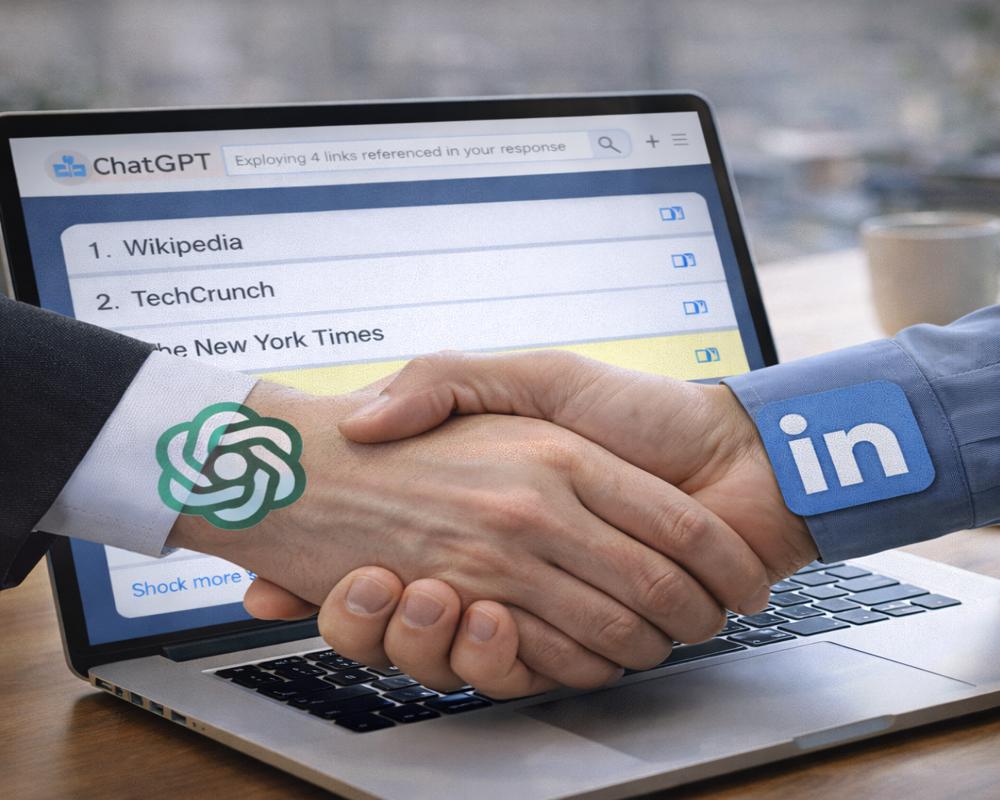
Between December 2025 and mid-February 2026, LinkedIn more than doubled its domain rank on ChatGPT, becoming the chatbot’s fifth-most-cited source globally, according to data from Profound, an AI marketing intelligence firm. This is not a minor platform statistic. It is a structural signal that LinkedIn has become one of the most important surfaces for AI search visibility and that most B2B brands are dramatically underinvesting in it as an AI citation channel while over-indexing it as a social engagement metric.
Why AI Systems Are Citing LinkedIn at This Scale
The rise of LinkedIn as a primary source of AI citations is not accidental. It reflects a specific set of properties that AI systems favor when selecting sources to cite in generated answers.
LinkedIn content carries strong signals of author authority. When a named professional with a verifiable track record publishes a specific, practitioner-level insight on LinkedIn, it reads as a credible primary source to AI citation systems, not a generic web page. The same claim published on an anonymous blog carries far less citation weight than one attributed to a named expert with a complete professional profile, employment history, and peer engagement signals on LinkedIn.
LinkedIn also benefits from domain authority signals that AI systems trust. The platform’s content is consistently indexed, consistently attributed, and consistently structured around professional expertise. These are precisely the signals that make a source citable rather than merely retrievable.
According to Semrush analysis, articles make up the majority of LinkedIn’s AI citations. Regular posts also contribute meaningfully; more than 28% of LinkedIn’s citations on ChatGPT come from standard posts, not just long-form articles. Critically, more than 70% of LinkedIn’s citations went to content of 500-2,000 words, regardless of format. And the posts being cited are not viral content. Most of the cited LinkedIn posts had only 15-25 reactions, yet the authors posted regularly. AI algorithms value consistency and relevance over virality.
What LinkedIn Conversational Search Adds to This Picture
LinkedIn recently launched AI-powered conversational search, allowing users to run natural-language queries like “ex-colleagues who became founders in healthcare in New York” across the platform’s professional graph. This feature, demonstrated by LinkedIn’s Chief Product Officer Tomer Cohen, represents LinkedIn’s own move into agentic search, not just a place where AI systems cite content, but a platform that is itself becoming an AI-driven discovery engine.
For brands and professionals, this creates a double visibility opportunity: appearing in AI-generated answers across external platforms like ChatGPT that cite LinkedIn content, and appearing in LinkedIn’s own AI-powered search results when prospects search for expertise or companies that match specific criteria. The two visibility channels are separate, but reinforcing stronger LinkedIn content performance improves both simultaneously.
The AI Citation Gap Most B2B Brands Have Right Now
Most B2B marketing teams treat LinkedIn primarily as a distribution channel, a place to post content created elsewhere and measure reach and engagement. The Profound data reframes this entirely. LinkedIn is not just a distribution channel. It is now an AI citation source that shapes how your brand appears in ChatGPT, Google AI Overviews, and Perplexity responses to queries your target customers are asking.
The practical implication: a brand whose executives and subject-matter experts publish consistently on LinkedIn about their specific areas of expertise is building an AI citation asset. A brand whose LinkedIn presence consists of company page updates and repurposed blog posts is not. The difference between these two approaches will become increasingly visible in AI search outcomes over the next 12 months.
There is a meaningful warning embedded in this data: over half of LinkedIn posts are now AI-generated, according to research from Originality AI. AI systems are becoming better at detecting and deprioritizing synthetic content, and audiences are already responding negatively: 52% reduce engagement when they suspect content is AI-generated. The LinkedIn content that earns AI citations is practitioner-specific, personally voiced, and demonstrably expert. Generic thought-leadership content generated at scale is not earning citations regardless of volume.
Five Actions to Build LinkedIn as an AI Citation Channel
1. Identify Your Experts and Assign Topic Ownership
Individual profiles, not company pages, primarily drive AI citation on LinkedIn. Identify the two to four people in your organization with the deepest, genuine expertise in your most commercially important topic areas. These are your AI citation contributors, not your most prolific posters or your most senior executives necessarily, but the people with the most specific, verifiable, practitioner-level knowledge. Assign each a clear topic domain and build their LinkedIn publishing program around it.
2. Publish 500 to 2,000 Word Pieces on Specific, Practical Topics
The Semrush citation analysis is precise about which format earns citations: 500- to 2,000-word pieces that share specific, practical knowledge relevant to what users are actually searching for. Not broad industry commentary. Not content marketing principles. Specific, practitioner-level insight: “here is how we solved X problem,” “here is what the data actually shows about Y,” “here is what most people get wrong about Z.” This level of specificity is what differentiates citable from uncited content on LinkedIn.
3. Post Consistently Rather Than Virally
The cited LinkedIn content in Semrush’s analysis had modest engagement by social media standards, with 15 to 25 reactions per post. But the authors posted regularly. AI citation systems are not measuring virality. They are measuring consistency of presence in a specific topic area over time. A posting cadence of two to three high-quality, specific pieces per week from each identified expert will build more AI citation value than one occasionally viral post per month.
4. Optimize LinkedIn Articles for AI Extraction
Articles make up the majority of LinkedIn’s AI citations. Apply the same content structure principles that drive AI citation on web pages: lead with your most citation-worthy claim in the opening paragraph, use specific H2 subheadings that state factual claims, include concrete data points and named examples, and attribute clearly to a named expert with a complete, credible LinkedIn profile. These are the content signals AI systems use to decide whether to cite a piece.
5. Track LinkedIn’s AI Citation Performance
Standard LinkedIn analytics do not show you where external AI systems are citing your content. Use AI search monitoring tools, such as Profound and Semrush’s AI tracking features, or manually test across ChatGPT, Perplexity, and Google AI Mode to check whether your brand’s LinkedIn content appears in AI responses to your target queries. This baseline gives you a measure of whether your LinkedIn AI citation strategy is working and identifies the gaps.
The Compounding Advantage of Early Action
LinkedIn’s rise to ChatGPT’s fifth-most-cited source happened quickly, more than doubling in domain rank in under three months. The trajectory suggests this ranking will continue to improve as more user queries touch professional and B2B topics, where LinkedIn content is the most authoritative available source. The brands whose experts are already publishing consistently on LinkedIn in their specific topic domains are building citation equity that will compound. Those treating LinkedIn purely as a social engagement channel are missing one of the clearest AI visibility opportunities available right now.
Get the B2B content and AI visibility intelligence that drives results at ejournalz.com.